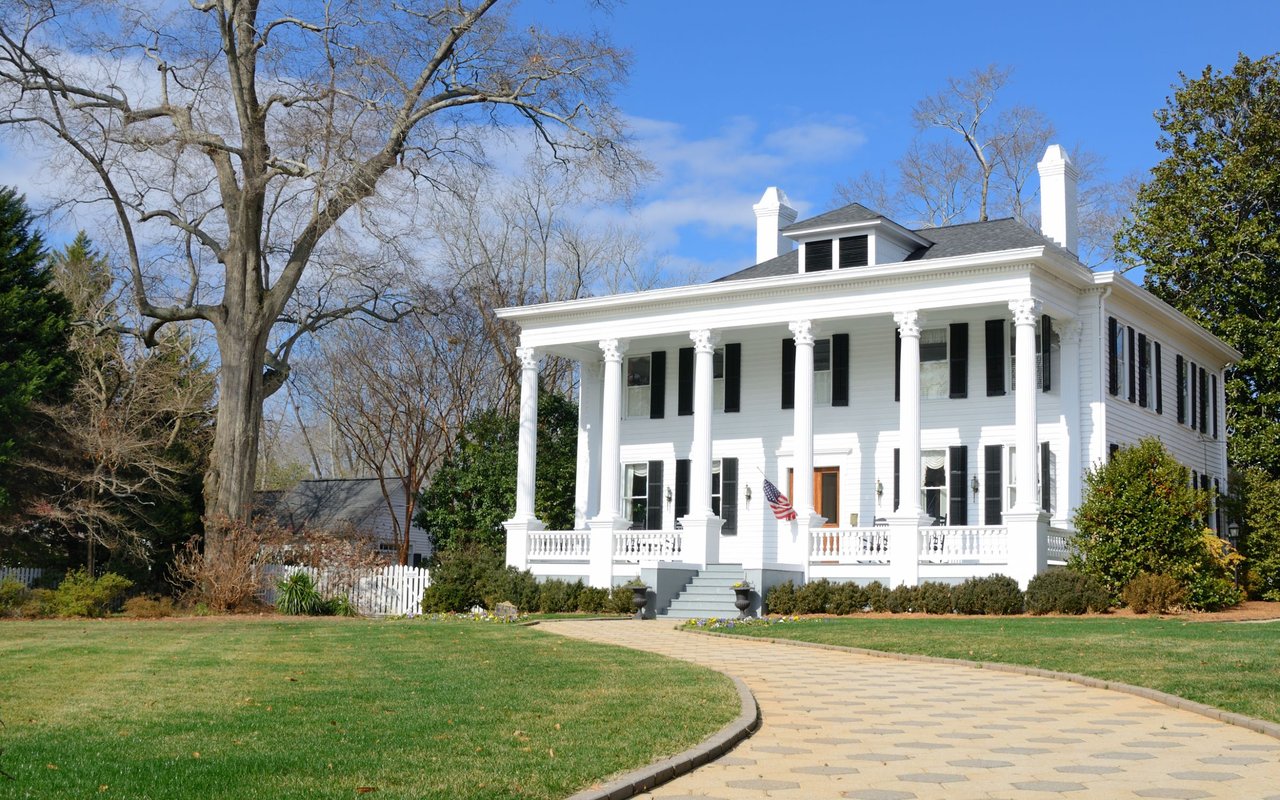
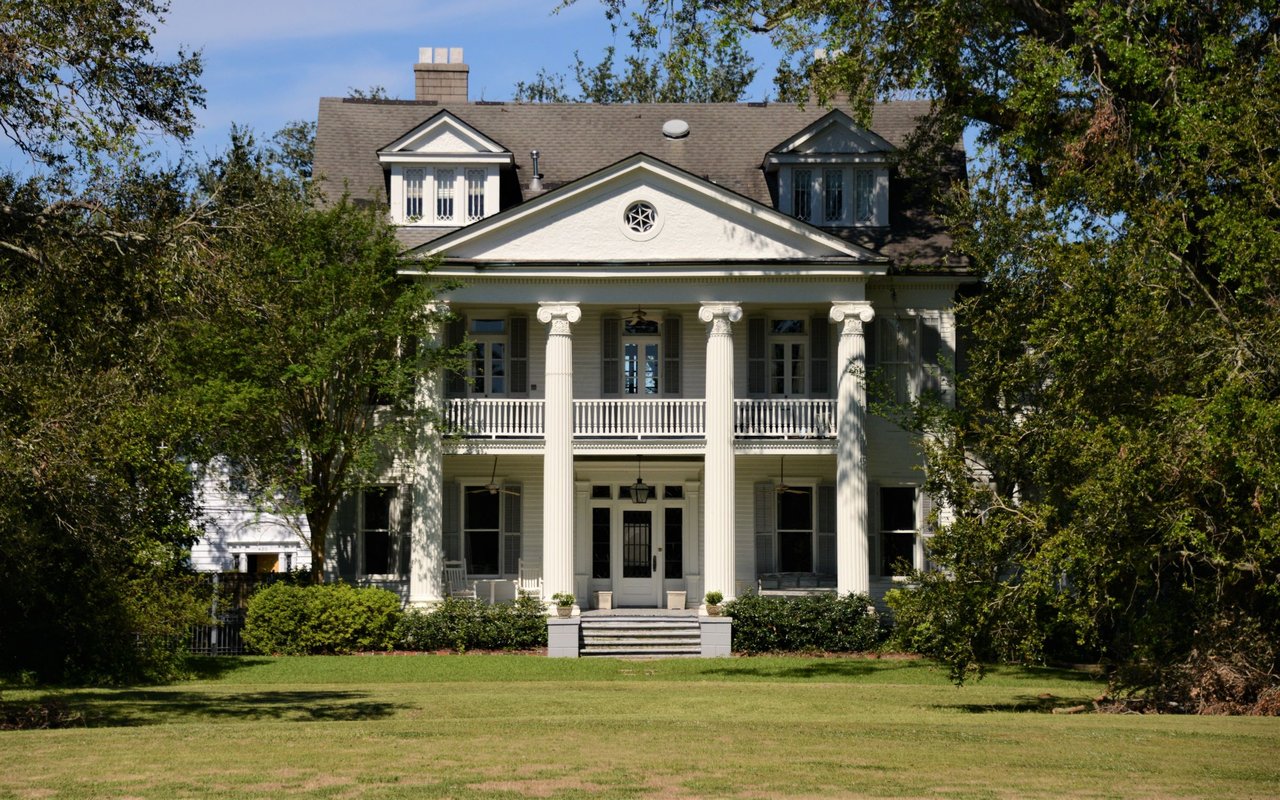
"It just kind of went by the wayside," St. Martinville City Councilman Mike Fuselier said of the Duchamp Opera House, the building the city owned for three decades before letting it go in 2022. "It was just kind of costing us money."
That's not a sentence you expect to hear about the oldest surviving opera house in the Americas. But for most of the last twenty years, that's exactly what the Duchamp Opera House was to Saint Martinville: an 1830 building on South Main Street that the city couldn't quite justify keeping and couldn't quite bring itself to sell either. Now it's booked for a wedding one weekend and an 80s dance party the next. And a few blocks away, crews are ripping up the same stretch of Main Street the building sits on to replace the sidewalks. Those two facts are connected, and the order they happened in tells you something about how this town actually works.
What's Actually Torn Up Right Now
If you've tried to walk or bike down Main Street between Berard Street and Dernier Street this year, you've run into orange fencing and saw-cut concrete. That's the St. Martinville Main Street Sidewalk Enhancement Project, funded by a $1.4 million state grant the city landed to widen the existing four-foot sidewalks to five feet and add decorative lighting in flower beds roughly every hundred feet, engineered by C.H. Fenstermaker and Associates out of Lafayette.
Before the state money showed up, the city could only ever afford to fix a portion of Main Street's sidewalks, and the patchwork showed. One resident who bikes the route daily complained to a local news crew that cars routinely drift into the narrow sidewalk lane, forcing cyclists into yards to avoid getting hit. City officials have said this is the first of three planned phases meant to eventually bring consistent, walkable sidewalks to the whole downtown corridor, not just this one stretch.
The contract called for the work to wrap within 120 working days of the notice to proceed, which followed a bid opening in November 2025. Run that math forward from a winter start and phase one should already be finished or very close to it by now, with two more phases still to come before Main Street is fully redone end to end.
Here's what the current phase actually covers:
- Removal and replacement of roughly 0.85 miles of existing sidewalk and curb
- Widening from four feet to five feet along the corridor
- Thirty new decorative light installations set in flower beds
- Underground conduit to power the new lighting
- Adjustments to existing catch basins and driveway approaches
None of that is glamorous. But it's the kind of unglamorous work that only gets funded when a city can point to something worth protecting. And a few doors down from the construction fencing, something worth protecting had already quietly reopened.
The Building That Predates the Sidewalks by Two Hundred Years
The Duchamp Opera House was built in 1830, which makes it not just the oldest building in St. Martin Parish but reportedly the oldest surviving opera house still standing in the country. Its second floor once hosted traveling opera companies, dance troupes, and touring acts from around the world, a role the building played for decades before it was sold in 1918 and turned into the Bienvenue Brothers Department Store. When that store closed in 1994, the building was handed to the city, which tried to make it work as a theater and art gallery for a while. Eventually, as Fuselier put it, it just stopped making sense to keep.
In 2022, a father-son pair from the area, John and Mike LeBlanc, bought the building and put it through a historically guided renovation. It reopened as a premier event space with overnight accommodations, the kind of venue people now book for weddings and receptions. "We can potentially preserve the history of the building and better tell the story of what's happened here," the LeBlancs said of the purchase. "It means a lot to us."
That alone would be a nice local preservation story. What makes it more interesting is what happened next.
What's Actually Happening Inside Now
In the fall of 2024, live music came back to the opera house for the first time in generations, through a new concert series called Live from Duchamp Opera House. The series opened with a performance by Amis du Teche, a young St. Martin Parish band that had already played the Jazz and Heritage Festival in New Orleans and South by Southwest that same year. Concerts run in the venue's theatre-style seating, capped at one hundred guests, with general admission tickets priced at fifteen dollars and support from the St. Martinville Chamber of Commerce and the St. Martin Parish Tourism Commission to keep it affordable.
The programming hasn't stayed limited to Cajun music revivals. On August 29, the opera house is hosting Plaza Throwback, an '80s and '90s dance night with a DJ spinning classic freestyle, techno, and club hits, doors at 8:30 PM, business casual, cash bar. It's the kind of event you'd expect from a converted warehouse in a bigger city, not from a building that spent the better part of two decades as a line item the city was trying to stop paying for.
That range, from an intimate acoustic concert series honoring the parish's Cajun music heritage to a late-night dance party, is the clearest sign that the building isn't being preserved as a static museum piece. It's being used.
The Order of Operations Got Reversed
Here's the part worth sitting with. In most small towns, the sequence goes: the city fixes up Main Street first, adds the lighting and the sidewalks, and hopes private investment follows because the block finally looks like somewhere worth opening a business. Saint Martinville's timeline ran the other direction on the ground. The LeBlancs bought and restored the opera house in 2022, well before any sidewalk money was on the table. The concert series was already drawing people downtown by the fall of 2024. The actual physical work out front, the saw-cutting, the curb removal, the conduit for the new lighting, didn't start until the construction bid closed in November 2025, three years after private money went into the building next door.
The infrastructure caught up to the interest, not the other way around.
That's consistent with how St. Martinville Main Street, the local nonprofit that has coordinated downtown revitalization since the district's 1993 designation, describes its own track record: 40 net new businesses, 325 net new jobs, and $24.26 million in combined public and private investment since it started, alongside nearly 36,000 volunteer hours. Those numbers cover the full life of the program, not a single year, but they point to the same pattern the opera house illustrates on a smaller scale. Private commitment tends to arrive first here. Public dollars tend to follow once someone's already proven the bet.
What This Means If You're Watching Downtown Right Now
If you live in Saint Martinville, none of this changes the parts of downtown that have stayed constant for two centuries. Bayou Teche still runs past the Acadian Memorial and its Robert Dafford mural. The Evangeline Oak still anchors the little park where the Acadian Memorial Heritage Festival gathers every March for jambalaya, wooden boat processions, and Cajun music. Those fixtures aren't going anywhere, and this isn't a story about the town reinventing itself.
What's different is that the same three blocks you've been detouring around all year, the ones with the saw-cut concrete and the temporary fencing, now lead somewhere you might actually want to be on a Saturday night. That's new. For a downtown that spent twenty years explaining why its oldest building wasn't worth the upkeep, having it booked out for weddings, concerts, and dance parties is a genuinely different kind of evening than Main Street has offered in a long time.
The sidewalks will finish eventually. Phases two and three are still ahead. But the thing the sidewalks are actually leading to, the reason anyone would want a wider, better-lit path down that block, opened back up first.
If you're weighing what a home near this corridor is actually worth, or trying to figure out what a fixer-upper's renovation potential looks like against a downtown that's clearly in motion, Joan Beduze has spent the last twelve years reading these Acadiana neighborhoods block by block. Let's connect.