






If you are thinking about buying land near Milton, it is easy to focus on the view, the acreage, or the idea you have in your head for the property. But with land, the real value often comes down to what you can actually do with it. Before you fall in love with a tract, it helps to know how access, utilities, drainage, floodplain rules, and zoning may affect your plans. This guide will walk you through the key things to check so you can move forward with more confidence. Let’s dive in.
Why land near Milton needs extra due diligence
Buying land is different from buying an existing home. With a house, you can usually see how the property functions right away. With raw land or acreage near Milton, you may need to confirm boundaries, water service, septic options, drainage, and zoning before you know whether the parcel truly fits your goals.
In Lafayette Parish, zoning, floodplain status, drainage, and utility availability can all affect how a property can be used and what it may cost to improve. According to Lafayette Consolidated Government’s zoning guidance, a property’s zoning district must allow the proposed use and development standards before it can receive permits or approvals tied to building or occupancy.
Start with parcel boundaries and access
One of the first things to verify is the exact property you are buying. A reliable survey matters because it defines the property boundaries and may also reveal issues like fences or improvements crossing a line. The LSU AgCenter notes that lenders may also require a survey before closing.
Access matters just as much as acreage. A parcel may look great on paper, but you still need to know how you will reach a future homesite, shop, or other improvement. If you plan to add a driveway, fence, utility run, or septic work, Louisiana utility marking should be part of the process before any digging begins.
Before excavation, Louisiana One Call is the free statewide utility-marking service, and SLEMCO advises customers to call at least 48 hours in advance. That step can help you avoid costly mistakes when planning improvements.
Confirm utilities, not assumptions
Near Milton, utility service can vary from one tract to the next. The Louisiana Department of Health lists both Milton Purchase Water System and Milton Water System as public water systems in Lafayette Parish, and LUS conservation rules also recognize Milton Water System customers alongside city systems. The practical takeaway is simple: do not assume every parcel near Milton is served by the same provider.
This is one area where buyers can save themselves time and frustration. A tract may have public water nearby, or it may require additional coordination, a private well, or other infrastructure decisions. If you are comparing multiple parcels, utility confirmation can quickly separate a workable property from one that may need more investment than expected.
Ask the right water questions
If a property does not connect to public water, a private well may be part of the plan. The Louisiana Department of Health explains that private wells are not regulated under the federal Safe Drinking Water Act, which means the owner is responsible for sampling and maintenance. LDH strongly recommends annual coliform and E. coli testing.
For buyers, that means you should ask about the well’s history, recent testing, and whether any lender-required documentation may apply. LDH also provides real estate testing guidance, which can help frame the questions you ask before closing.
Check septic and sewer feasibility early
Wastewater planning is another major step for land buyers. If public sewer is not available, the property may need a septic system. According to the Louisiana Department of Health wastewater guidance, septic installation requires proper licensing, permitting is handled through parish sanitarians, and homeowners remain responsible for maintenance while they occupy the dwelling.
That is why septic feasibility should come early, not late. Before you get attached to a house plan, it is smart to confirm whether the lot is large enough and suitable for the system your project may require.
Here are a few practical questions to ask:
- Is public sewer available for this parcel?
- If not, can the lot support a septic system?
- Will the planned homesite placement affect septic layout?
- If the tract uses a well, has the water been tested recently?
Floodplain matters in Lafayette Parish
Floodplain status is one of the most important checks for land near Milton. Lafayette Consolidated Government’s flood FAQ explains that parish flood zones are based on the 100-year flood and that buyers can look up flood-zone information for a structure by street address using parish flood maps.
The same FAQ notes that most homeowner insurance policies do not cover flood damage. It also states that flood insurance is mandatory for structures with federally backed mortgages in Special Flood Hazard Areas such as Zones VE, AE, AH, and A.
If you plan to build, elevation rules matter too. LCG requires the lowest floor of new construction or substantial improvements in flood areas to be at least 1 foot above Base Flood Elevation. A surveyor completes elevation certificates, and in some cases FEMA map-change processes may help if the elevation supports it.
Look beyond flood zones to drainage
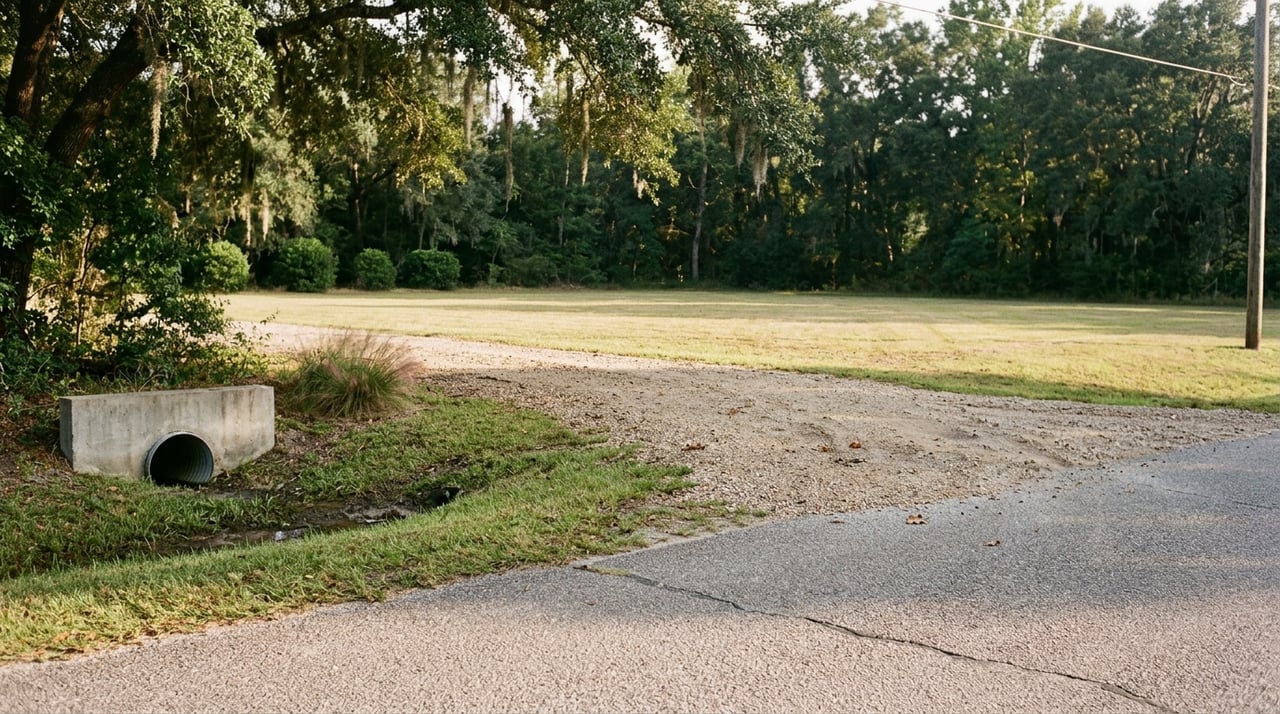
Flood maps are important, but they are not the whole story. Drainage patterns on the land can affect where you place a home, how a driveway drains, and whether you may need fill for a house pad. In Lafayette Parish, the Drainage Department is responsible for drainage improvements and maintenance, while some private drainage features in developments may be maintained by homeowner associations or similar entities.
For land buyers, this means you should think about how water naturally moves across the site. A parcel can be attractive and still create added costs if low spots, swales, or site grading make your intended layout more difficult. Looking at drainage early can help you avoid redesigning your plans later.
Lafayette Parish also currently holds a Class 7 CRS rating, which LCG says corresponds to a 15% discount on many flood insurance policies. That is helpful context, but it does not replace parcel-specific flood and elevation review.
Review zoning before you plan improvements
It is common for buyers to picture a future home, workshop, guest structure, or long-term mixed-use idea on a tract. But the first question is not whether the idea sounds reasonable. The first question is whether the property’s current zoning allows it.
According to LCG’s zoning overview, Lafayette’s zoning system includes agricultural, residential, mixed-use, commercial, industrial, planned development, and public or institutional districts. The A agricultural district is intended for land that is principally agricultural or natural in character and has low residential densities, while other districts may allow broader uses.
That matters because a parcel that seems ideal may still need zoning review, subdivision review, or other approvals before your plans can move forward. It is also wise to keep future growth in mind. PlanLafayette and neighborhood planning help shape how the built environment and public systems work together over time, which can influence the long-term context around a property.
Think about site layout, not just lot size
A bigger tract is not always a better fit if the usable layout does not support what you want to build. You need to think about house orientation, driveway placement, drainage flow, utility connections, and whether future improvements could fit comfortably on the site. This is where a design-minded review can be especially helpful.
When you compare parcels, try to picture how the land would function in real life. Could the homesite sit on higher ground? Would the driveway have a practical route? Is there room for future expansion without creating conflicts with drainage, septic placement, or setbacks? These questions can make a major difference in how enjoyable and cost-effective the property becomes.
A smart due diligence order
When you are evaluating land near Milton, the safest process is usually to move in a practical sequence. That helps you identify major issues before you spend time refining ideas that may not work on that parcel.
A strong order to follow is:
- Confirm the survey and property boundaries.
- Verify access and basic utility availability.
- Review public water, private well, sewer, or septic needs.
- Check floodplain, elevation, and drainage conditions.
- Review zoning and any future-use questions.
This order reflects the main risk points raised in the official guidance above and helps keep your decision grounded in how the property can actually function.
If you are weighing a tract near Milton and want a practical second opinion, working with someone who understands both land value and site potential can make the process clearer. With her local market experience and design background, Joan Beduze can help you look beyond the surface, ask the right questions, and evaluate whether a parcel truly supports your goals.
FAQs
What should you verify first when buying land near Milton?
- Start with a current survey, clear property boundaries, legal access, and basic utility availability before focusing on building plans.
How do flood zones affect land near Milton, Louisiana?
- In Lafayette Parish, flood zones can affect insurance requirements, building elevation standards, and the overall cost of developing a parcel.
Does every land parcel near Milton have the same water provider?
- No. Public water service can vary by parcel, so you should confirm the exact provider rather than assume one system serves all properties near Milton.
What if a parcel near Milton does not have public sewer?
- If public sewer is unavailable, the property may need a septic system, so you should confirm septic feasibility early in your due diligence.
Why is zoning important when buying acreage near Milton?
- Zoning affects what uses and improvements may be allowed on the property, including whether additional reviews or approvals may be needed later.